When water damage affects a home or business in Oklahoma City the restoration process can feel overwhelming. Many property owners are unsure what steps are involved or how long recovery may take. Understanding what to expect during water damage restoration helps reduce uncertainty and allows homeowners to respond with confidence.
Water damage restoration is a structured process designed to remove excess water dry affected areas and restore the property to a safe and stable condition. Each step plays a critical role in preventing long term damage and protecting the structure of the building.
Initial Inspection and Damage Assessment
The water damage restoration process begins with a detailed inspection of the property. This step focuses on identifying the source of the water determining how far it has spread and evaluating which materials have been affected. In Oklahoma City water damage can result from plumbing failures appliance leaks storms or drainage issues and each situation requires a tailored approach.
During the inspection moisture detection tools are used to locate hidden water inside walls flooring and structural components. Even areas that appear dry on the surface may contain trapped moisture that can cause damage if left untreated. A clear understanding of the extent of water damage allows the restoration plan to be developed accurately.
Water Removal and Extraction
Once the inspection is complete the next step is removing excess water from the property. Standing water and saturated materials are addressed using professional extraction equipment. This step is essential because the longer water remains the more damage it can cause.
Water removal helps reduce pressure on structural materials and limits the spread of moisture into unaffected areas. In Oklahoma City where humidity levels can vary proper extraction is especially important to prevent secondary issues such as mold growth or material breakdown.
Drying and Dehumidification
After visible water has been removed the drying phase begins. Drying is one of the most critical parts of the water damage restoration process. Moisture often remains trapped inside walls subfloors insulation and structural components even after water extraction.
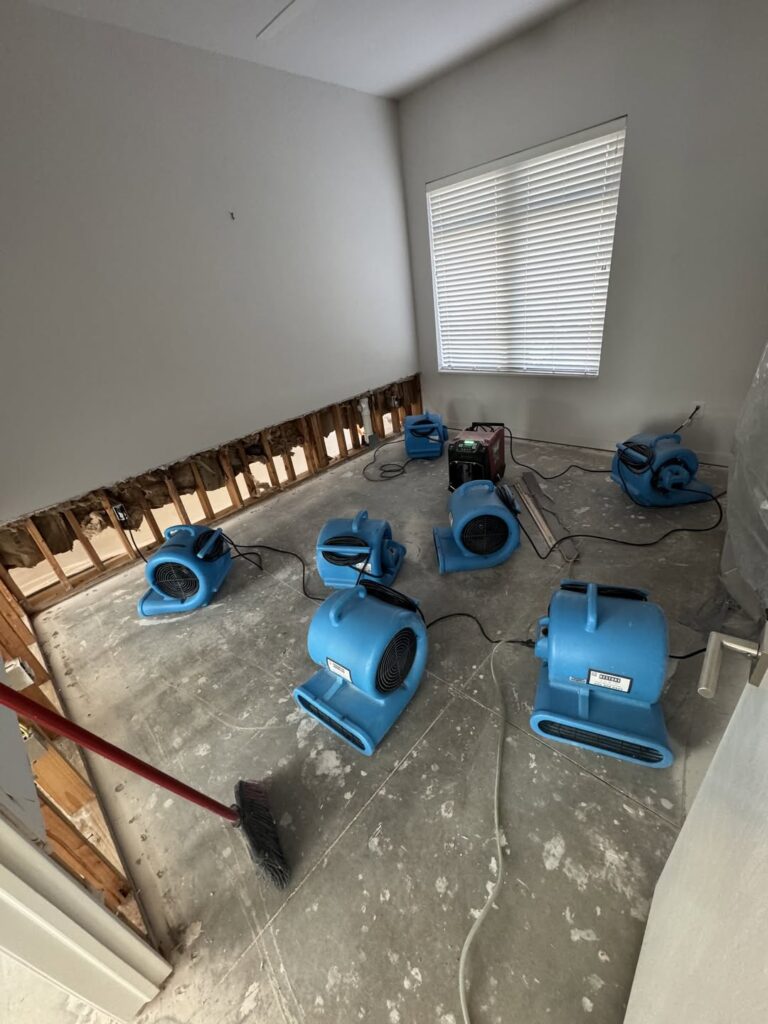
Professional drying equipment is used to circulate air and remove moisture from affected areas. Dehumidification helps control humidity levels and supports proper drying throughout the property. Moisture levels are monitored regularly to ensure drying progresses effectively.
This step may take several days depending on the extent of the damage and the materials involved. Proper drying helps prevent long term problems such as warping swelling and microbial growth.
Monitoring and Moisture Verification
Throughout the drying process moisture levels are checked using specialized tools. Monitoring ensures that affected materials are drying properly and allows adjustments to be made as needed. This step is often overlooked but is essential for confirming that moisture has been fully removed.
In Oklahoma City where weather conditions can influence indoor humidity moisture monitoring helps ensure that restoration efforts remain effective despite external factors.
Cleaning and Sanitizing Affected Areas
Water damage can introduce contaminants into the home depending on the source of the water. As part of the restoration process affected areas are cleaned and sanitized to help restore a healthy indoor environment.
Cleaning focuses on removing residue debris and contaminants from surfaces and materials. This step supports indoor air quality and prepares the property for repairs. Proper cleaning also helps prevent odors and lingering issues related to water exposure.
Repair and Restoration of Damaged Materials
Once drying and cleaning are complete repairs can begin. Repair work may include replacing drywall flooring insulation or other materials that were damaged beyond recovery. The goal of this phase is to return the property to a safe functional condition.
In many cases repairs are minor and focused on specific areas. In more severe situations structural components may require attention. Each restoration project is approached with care and attention to detail to ensure results that last.
Final Review and Property Stabilization
The final stage of water damage restoration involves reviewing the work completed and confirming that the property is stable and safe. Moisture levels are verified one last time and repairs are inspected to ensure quality.
This step provides peace of mind for property owners and confirms that the restoration process has been completed properly. A thorough restoration helps protect the home from future issues related to water damage.
Why Professional Restoration Makes a Difference
Water damage restoration involves more than drying visible water. Hidden moisture can lead to mold growth structural damage and long term repair costs if not handled correctly. Professional restoration ensures that all affected areas are addressed using proven methods and proper equipment.
In Oklahoma City where homes face a variety of water damage risks professional restoration helps manage moisture effectively and protect property value.
Knowing What to Expect Helps You Act Faster
Understanding the water damage restoration process allows homeowners to respond quickly and make informed decisions. Fast action combined with professional restoration reduces damage limits disruption and helps return the home to normal use sooner.
Water damage is stressful but knowing what to expect during restoration helps make the recovery process more manageable. With a clear plan and proper execution Oklahoma City properties can be restored safely and effectively.